
Deadly Envy, Sarah Spillman Police Procedurals: Book 12
Original price was: $19.99.$14.99Current price is: $14.99.
The Dark Side of Influence
When popular food critic Piper Randall is gunned down outside a Denver restaurant, homicide detective Sarah Spillman is thrust into a case where envy is on the menu and revenge is served cold.
The internet influencer’s rise to fame made Piper plenty of enemies—from chefs with bruised egos, to family and friends who harbor dark secrets, to others craving the spotlight. But when Sarah begins unraveling Piper’s carefully curated life, she discovers that every answer leads to more questions.
And if Sarah doesn’t uncover the truth soon, the killer may decide one body isn’t enough—especially when Sarah starts asking the wrong people the right questions.
Sample Chapter
Chapter One
Look at her. That performance. So calculated, so practiced. That carefully crafted “casual” delivery. Must have taken hours of practice to nail that timing. Nobody’s that natural on the first try.
The video on the laptop continues to play, the woman in the video talking about a Thai restaurant on East Colfax. Her voice is warm, with a touch of huskiness, almost sexy. Not with that grating, high-pitched perkiness that reeks of artificiality. Her brown hair’s slightly tousled, her makeup just so, her smile engaging.
It’s clear she likes doing this and thinks she’s got it all together, the right tone and inflection in her voice, the way she stares at the camera, her expression changing as she gives her review.
After a brief introduction, the woman in the video says, “Okay foodies, I’m at Thai Spice Kitchen on East Colfax, and you need to try this Khao Soi.”
The woman tilts a white bowl toward the camera, revealing the golden color of the curry noodle soup. As she sets the bowl down, she dips a spoon into the soup and lifts it up, showing the thickness of the coconut curry broth.
That’s exactly what people want to see, and she knows it. Of course she does. And she wouldn’t be doing that if it weren’t for me. I taught her all that.
She tastes the soup, makes an “mm” sound, and smiles as she puts down the spoon. “Delicious,” she pronounces. Then she moves on to another dish.
She’s good. Look at her, so smooth with her delivery, just the right amount of enthusiasm as she talks about the food. There’s an authoritative tone, but not over-the-top. I taught her that!
The woman in the video shows the Pad Kra Pao, describing its beautiful mix of vibrant colors in the green basil and red chilies.
“This is a popular street dish in Thailand,” she says.
Like she really knows that. She’s never been to Thailand.
When the woman finishes, she puts down her fork with a thumbs up, an ovation for the Pad Kra Pao. Then the reel cuts between other dishes, and she talks expertly, with a comfortable pace—not the rapid-fire delivery of someone trying too hard, but not drawn out either. Her words flow naturally, like she’s talking to a friend across the table.
That was a good little review, I’ll give her that. When she says something is “perfectly spiced” or “incredibly tender,” you believe her. Hmm. Is that Thai Spice Kitchen? It’s hard to tell what the background is behind her. It’d be tempting to go there, but I would never give her the satisfaction of thinking she swayed me. No, not after all that’s happened. She needs to pay for what she did.
The video plays on, and the woman begins a discussion of the final dish, Massaman Curry. The woman picks up her spoon and takes a bite, and her lips pucker slightly as she assesses what she’s tasting. She takes a few more bites, then gives a slight shake of her head as she sets down the spoon.
“Okay foodies, I really wanted to love this, but I have to keep it real with you. The Massaman is pretty disappointing. The curry sauce is weirdly thin—it should be rich and creamy. The potatoes were undercooked, and honestly? The beef was tough.”
She shrugs. “I hate giving negative reviews, especially since everything else was so good, but you deserve to know. The flavors were just . . . flat? Missing that complex balance of sweet, tangy, and savory that makes Massaman special. No hint of star anise or cardamom, and where was the peanut richness?”
Man, I have to admit, she’s good. She knows how to draw you in, how to entertain you. It’s no wonder she’s gained so many followers, has had so much success. And she let it go to her head. She thinks she’s above everyone else now, above me! Well, not for long.
The woman goes on. “Have you tried this place? Let me know in . . .”
No more from you. A quick touch of the screen to stop the video. To stop you, once and for all.
Now picking up the phone and texting a message: “Just saw your review of Thai Spice Kitchen. It was great, hit all the right notes.” Sending the message, then waiting. Moments later, a reply.
“Thanks! I feel good about that video. I tried a few new things with it, and I think it’ll go over well.”
Oh, I’m sure it will. Not that you’ll ever realize it.
More texting. “Want to meet to chat about it?”
The response comes fast. “Sure. You home?”
“No.”
“Where?”
A quick glance around the room, then typing into the app. “Rosemary & Vine?”
“Sure, I can be there in an hour.”
A smile before typing again. “See you then.”
Seconds later, a thumbs-up icon in the text.
All right. This should work.
A look to a table, where a small handgun sits next to a glass of water.
It’ll be quick, although she doesn’t deserve that. I’d love to see her suffer. A little laugh. I guess I can’t have everything. But at least I’ll take care of this.
CHAPTER TWO
I parked my dark gray Jeep Grand Cherokee at the curb, killed the engine, and checked the address again. I was in the correct place, and there was the alley the dispatcher had told me about. I grimaced. There’s something about alleys. All the dark shadows, the places where people can hide. The dank smells, sometimes foul. It’s even worse at night, where the absence of light completely steals those shadows, leaving blackness, the lack of noise making you feel as if you’re alone in the world.
I grabbed a flashlight from the glove compartment, got out, and shut the door of the pre-owned but new-to-me vehicle, still not used to thinking of it as mine. I’d had a blue Ford Escape for a long time, and I’d recently felt I wanted to get something new. But if I was honest, it went deeper than that. As a homicide detective, I see the cruel underbelly of the city almost daily. It’s not an easy job, but the victories keep you going. Except that recently, I’d failed—a killer had gotten away with murder—and a few weeks later, that was still haunting me.
The Gloria Lott case. At first it had looked like a straightforward suicide, but something had set off warning bells. The more we’d dug, the clearer it had become—the husband, Neil, had systematically tormented his wife, Gloria, for months, pushing her toward that final desperate act. I’d interviewed him multiple times, watching him lie smoothly when I’d confronted him with what we’d pieced together. But he was too slick, and I didn’t have enough evidence to charge him. I knew in my bones he was guilty, but I wasn’t about to manufacture evidence just to make an arrest. So he’d walked. I hadn’t admitted it to anyone, but that one had gotten under my skin. I couldn’t help but wonder if I’d overestimated my abilities, thinking I’d be able to get him to confess. That hadn’t happened, and that failure felt like my fault. I’d hoped the new car might help shake my funk. I wasn’t sure it was working.
It was almost midnight on a Wednesday night, and although downtown Denver never really sleeps, it was much quieter now than in the daytime. The stillness felt eerie and amplified the tension thrumming in my chest. I rubbed my eyes, as the ghost of a restless night still haunted me. I’d stared at my bedroom ceiling for hours, as the Neil Lott case had replayed like a broken record. Then a call had come in that a body had been found near Arapahoe Street and Twenty-first. Now, standing at the entrance to an empty alley, the familiar weight of unresolved guilt lingered. I wondered if someone had gotten the message wrong. Where were the patrol cars, the responding officers?
I listened for a moment, heard a car passing on another street, and then resumed. I walked toward the alley entrance, took another moment to listen, and turned on the flashlight, its powerful beam cutting into the darkness. Light bounced halfway up brick walls on buildings to the left and right, and glowing eyes stared at me from under a nearby dumpster. I took a few steps into the alley, and a cat bolted from underneath the dumpster and ran off. Good thing I’d seen its eyes, or it might’ve startled me. I may have been hardened by the job in some ways, but I’m still human.
The flashlight beam set a path forward, and I stayed alert for anything. Another dumpster had a rank smell, like rotten food. The alley ran behind Rosemary & Vine, so there was likely refuse from the restaurant in the dumpster, along with who knew what else. Ten yards beyond that, the beam fell upon a body crumpled on the asphalt. I stopped and switched the flashlight to my left hand, then shined the beam all around, my right hand on the butt of my Glock, holstered to my hip. I paid particular attention to another doorway past the body, but no one was hiding there. Another dumpster sat farther down the alley, and I kept my eye on it as I took a few more steps toward the body.
There’s something about the smell of blood that I’d been trained to notice over years of homicide investigations. It has a distinct metallic odor due to its iron content, and it can also carry a salty note—somewhat like sea water—and it sometimes has a slightly sweet undertone. In larger quantities, blood takes on a heavier, more raw quality that some people compare to the smell of wet pennies or metal left out in the rain. That’s what I smelled now.
I looked all around again, then carefully walked toward the body and bent down. A woman lay on her side, eyes and mouth open in a surprised expression. Her makeup was a little heavy, accentuating blue eyes, and her brown hair fanned onto the asphalt. She wore a blue blouse tied in a French tuck and khaki shorts, Tevas on her feet. A pool of blood seeped from underneath her, but I couldn’t see how she’d been killed, no exit wound on her back from a bullet, no visible stab wounds.
“What were you doing in this alley?” I murmured. “You couldn’t have been dropped here, or there wouldn’t be so much blood.”
That’s as far as I got with my musings. Voices at the far end of the alley shattered the quiet. I straightened up and peered that way, still not seeing anyone. The voices grew louder and angrier. I glanced at the body, then started down the alley, still cautious, flashlight swinging back and forth, exposing more shadows but no people, no threats. I reached the far end of the alley, and two police cruisers came into view, lights off. An officer in a dark uniform was talking to a man who was obviously homeless, his clothes bedraggled, his white hair long and stringy.
“Let me go on,” the homeless man said as he tugged at a scraggly and unkempt beard. “I gotta go down that alley to get where I gotta go.”
The officer held her ground, even though the homeless man was well over six feet tall, towering over her.
“Sir, you can’t go down there,” she said, putting a hand on his arm. “This is official police business, and I’d like you to move on. Please listen to me.”
She was so polite, and it wasn’t working.
“I’m trying to,” he said. “I—”
He saw me and his eyes narrowed. The woman glanced over her shoulder at me as well. Her gaze flitted to the gold shield clipped to my waistband, and she held up a hand.
“You’re homicide?” she asked.
“Homicide?” the homeless man said. “What’s going on?”
I gave her a subtle nod, as my attention was pulled elsewhere. Behind her, another uniform stood next to a police SUV. This officer was taller and years older, with thinning gray hair, wrinkles lining his face, a weariness about him. He was leaning on the door of the car, in a heated exchange with someone in the back seat.
“You can’t keep me here,” a voice said. A man, his voice deep, full of ire. I didn’t hear how the officer replied.
“You two responded?” I asked the woman.
She nodded. “Burton,” she jerked her head toward the other officer, “had me stay here. Then this guy showed up.” She eyed the homeless man.
“You can’t stop me,” he said. “It’s a free country and I can go where I want.”
I was several feet away, and I strode toward them. The homeless man straightened, trying to appear tough.
“Where were you around eleven?” I asked.
He stared at me as he puzzled over that. “I was over there.” He pointed behind him. “I was hanging out with a few buddies, but we got in a fight, so I came this way.” His words were slurred.
“Did you see or hear anything around here?” I went on.
“No, I just got here.”
He was drunk, and I didn’t think he had enough wherewithal to lie. He sneered at me.
“You have ID?” I held out a hand.
He shook his head.
“Name?”
He hesitated. “Kyle Williams.”
“Address?” I had to check.
“I’m homeless, lady.” He pushed my shoulder. “Get out of my way.”
I got in his face. He reeked of alcohol and body odor. Another time I might’ve felt sorry for him, but I was annoyed. I’d barely been there five minutes, and things were coming undone faster than I could blink. I pointed down the block.
“Get out of here before I arrest you,” I said.
He looked at me, eyes darting back and forth as he seemed to contemplate how serious I was. Even in his drunken haze, he must’ve known he could be in some trouble—not a lot, maybe, but enough to potentially ruin whatever night he had planned. He took a step back.
“All right,” he muttered. “You people think you run everything, don’t you?”
I didn’t respond, and he backpedaled, then hurried down the block, his gait unsteady. He crossed the street and moved on. I turned to the officer, whose uniform nameplate read “Martinez.”
“Was he around when you got here?” I asked her.
“Nobody was.”
I thought fast. If I needed to talk to Kyle again, I’d have to check the local shelters. I doubted he had anything more to tell me though.
“Go back into the alley, string up crime-scene tape at either end, and don’t let anybody get close to that body,” I ordered her. “I can’t have anybody tampering with that crime scene.”
She tipped her head at me without a word and went to her vehicle for the tape, then pulled her flashlight from her belt and walked into the alley. I shook my head. My partners, Ernie Moore and Roland “Spats” Youngfield would be on their way, and it looked as if I’d need their help.
With the crime scene protected, I focused on the second officer. Martinez had called him Burton. As I stepped forward and got a closer look at him, I remembered him. Don Burton. He’d been on the force for over thirty years, and he’d gained a reputation. He was fine in public, and he generally followed all the rules, but he also was a know-it-all and thought he could do his job better than anybody else could do theirs. Including the investigators.
He saw me approach and he stepped back.
“Just cool your jets,” he said to the man in the vehicle. Then he took a few steps away from the SUV and stared at me. “It’s about time someone got here.”
Not a good way to start things, I thought but didn’t say. I glanced toward the SUV, then back to Burton.
“Want to fill me in?” I said, straining to keep an edge from my tone.
He nodded his head slowly, casual. “I was the first one here, and this guy,” he glanced to the vehicle, “was in the alley by the body. He’d called it in.”
We talked in low voices, and since I didn’t want the man in the vehicle to hear more, I took a few steps away. Burton followed.
“Martinez arrived shortly after me, and I had her stay with her vehicle so I could handle things,” he said.
“What happened next?” I asked.
“Hey!” the man yelled from the vehicle. “You can’t arrest me! I didn’t do anything wrong.”
Burton sighed, then answered my question. “He told me he’d come out of the restaurant to throw something into the dumpster and that’s when he saw the body. He dialed 911 and waited for us.”
My mind was already full of questions. “What restaurant? Rosemary & Vine?”
He nodded. “Yeah. He’s the owner, says he was staying late, working on the books and doing some cleanup.”
“What’s his name?”
“Chandler Cohen.”
I looked over Burton’s shoulder. “Why is he in the SUV?” I knew there was a negative tone in my voice now.
His brow furrowed. “There was something about the way he was answering my questions that I didn’t like. It felt like he was evasive, not wanting to tell me everything. I asked him if he touched the body, and if he’d walked around the alley, anything like that. He didn’t really want to answer, and then he said he wanted to go back inside the restaurant. I didn’t want him to do that—he could call someone, cover his tracks—so I told him he needed to stay. He got pushy so I had him come with me.” Burton’s tone had become a little arrogant, that know-it-all attitude on full display. “He got belligerent, so I cuffed him and put him in the back of the SUV.”
“You handcuffed him?” I raised my eyebrows, my frustration growing. “You think he might’ve killed the woman?”
“I don’t know.”
“Does he have a weapon?”
“Not that I could tell.”
My eyebrows stayed up. “Were you going to charge him with something?”
He shook his head. “No, but I needed to keep him out of the way. I didn’t want anything to happen to the crime scene.”
I suspected there was more than he was telling me, that he hadn’t used any skill to keep the restaurant owner calm, to just have him stand back until the homicide division arrived. Now Burton had made the situation worse. I ran a hand slowly over my face to give myself time to cool down. The gesture didn’t help that much.
“And now he’s all angry,” Burton said. “I can’t get him to tell me anything else.”
“Of course you can’t because you handled the whole thing poorly,” I snapped. “You should’ve just kept him out of the way. You could’ve sat with him in the restaurant and calmly have taken his statement while Martinez stayed in the alley so no one could approach the body.”
He matched my glare. “Listen, I know how to handle things, and I did this just fine. I can talk to him man and—”
“You’ll do nothing of the sort,” I said. “You’ve already escalated the situation. I’ll take it from here.”
I wanted to dress him down some more, to tell him how his actions weren’t going to make things any easier. Instead, I pointed toward the alley.
“You help Martinez keep the alley clear. I don’t want my crime scene tampered with.”
“What’re you going to do?”
“I’m going to get that man’s statement,” I said pointedly.
A few beats passed while Burton glared at me. Around us, the quiet was like a heavy blanket in the August nighttime heat.
“Yeah, you handle things,” he said.
He spun on his heel and took a couple steps, but I called out for him to stop. He whirled around.
“What?”
I held out a hand. “The cuffs.”
He grabbed his handcuff key from his pocket and tossed it to me.
“Good luck,” he said.
I waited until he positioned himself at the alley entrance, by crime-scene tape that Martinez had put up, and then I turned to the SUV. The man in the back seat was still fuming, and I was too. The last thing I wanted or needed was an irate witness.
What a way to start an investigation, I thought.
All of these are clean stories with no foul language, no gore, only necessary violence, and just inferred intimacy. In this story, a restaurant blogger-critic is found dead with plenty of folks who didn’t like her. Worse, all of the suspects are liars and act guilty. It is a very good story, and the ending really surprised me! I enjoy this author and this series. ~Reader review
| Format | Audiobook, Paperback |
|---|
You may also like…
-
Sale!
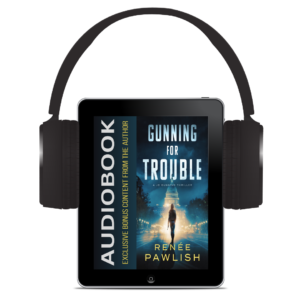
Gunning For Trouble, Jo Gunning Thrillers: Book 1
Price range: $9.99 through $14.99Select options This product has multiple variants. The options may be chosen on the product page -
Sale!

Deadly Desire, Sarah Spillman Police Procedurals: Book 11
Original price was: $19.99.$14.99Current price is: $14.99.Select options This product has multiple variants. The options may be chosen on the product page
Related products
-
Sale!

Gunning For Hire, Jo Gunning Thrillers: Book 3
Price range: $9.99 through $14.99Select options This product has multiple variants. The options may be chosen on the product page -
Sale!

Gunning For Secrets, Jo Gunning Thrillers: Book 7
Price range: $9.99 through $14.99Select options This product has multiple variants. The options may be chosen on the product page -

Mug 15oz – Renée Pawlish upright-stacked book banner, Reed & Sarah front
$12.32Select options This product has multiple variants. The options may be chosen on the product page -
Sale!
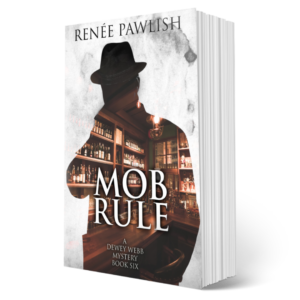
Mob Rule, Dewey Webb Historical Mysteries: Book 6
Original price was: $19.99.$14.99Current price is: $14.99.Select options This product has multiple variants. The options may be chosen on the product page

Reviews
There are no reviews yet.